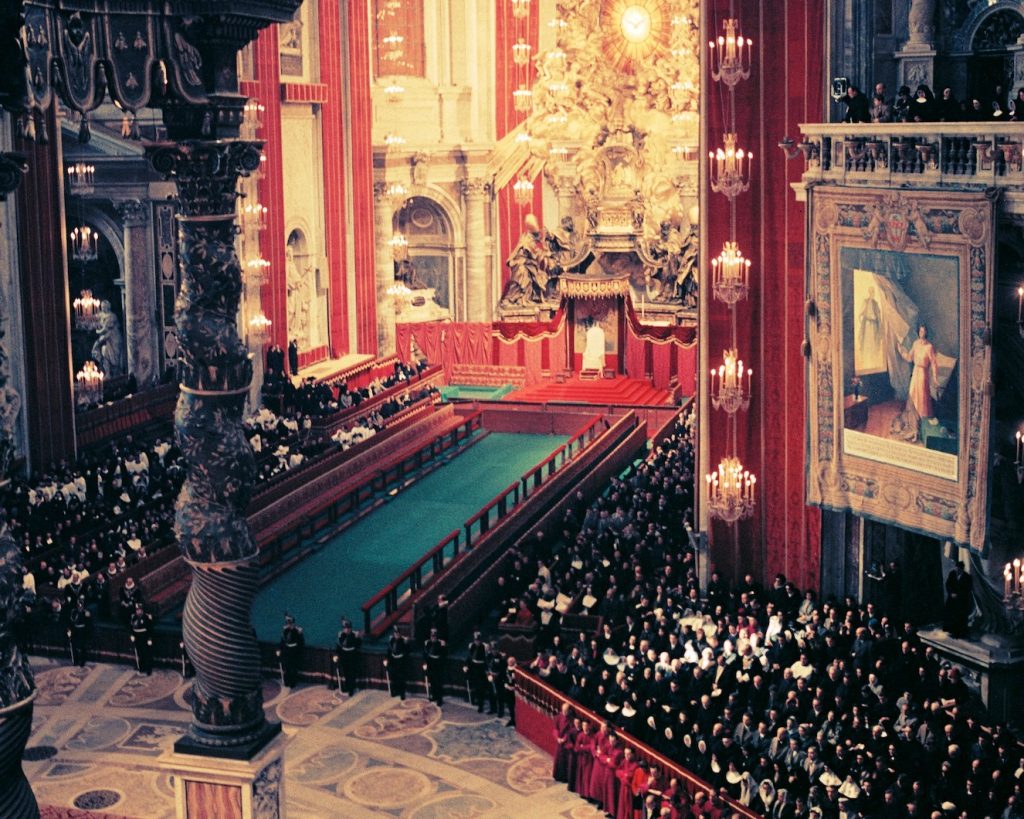

The Second Vatican Council formally closed on the feast of the Immaculate Conception (8 December 1965) with a Pontifical Mass celebrated by Pope St Paul VI.
In a speech given the previous day, the pontiff pointed out that the Council was coming to a close “not out of weariness, but in a state of vitality which that universal synod (had) awakened”. During that last session, sixteen documents, including the four major “Constitutions”, were approved. The final day featured a public ceremony in St. Peter’s Square where Pope Paul read “Messages of the Council” to various groups, scientists, artists, youth, the poor. With a total of 2,881 bishops taking part during those four years, the Second Vatican Council had been the largest in the history of the Catholic Church. It had awakened a state of vitality that has been preserved to this day.
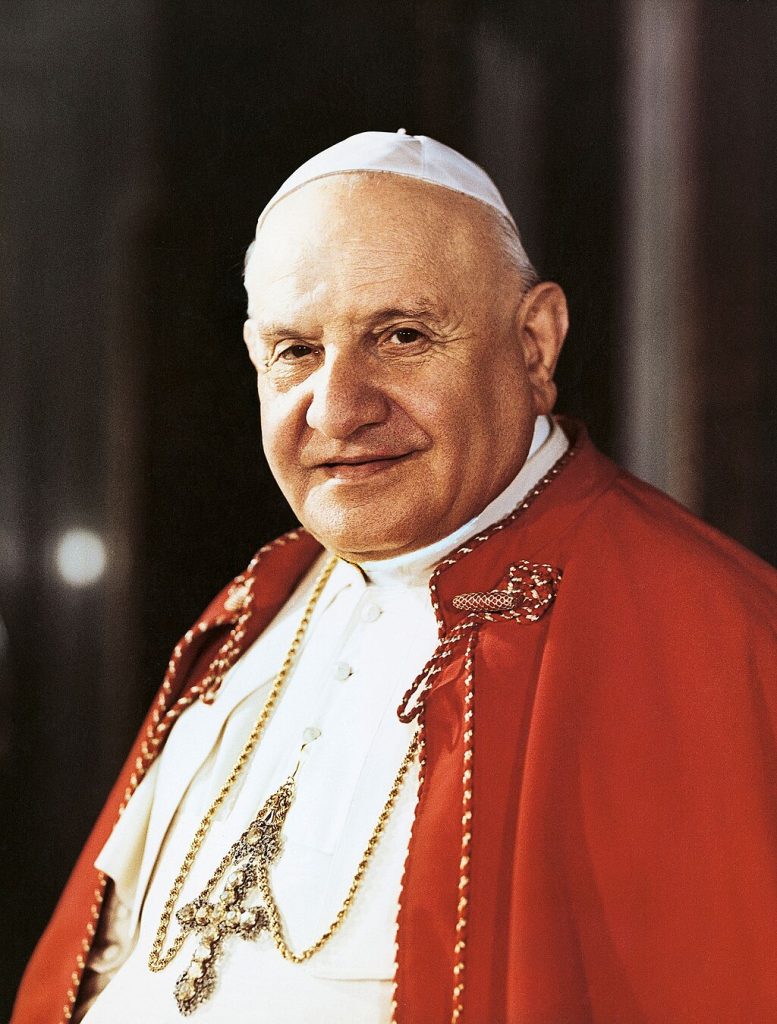
To comprehend such an overall achievement, we need to look back to those responsible. First it was the initiatives of Pope St John XXIII (1958 to 1963) who is rightly credited with the Council happening. Pope John had realised that the world was changing in so many ways, and that the Catholic Church needed to modernise and update (aggiornamento). The best way to do this would be via a General Council. While there was at first some hesitation about this, the Pope’s advisors realised there was indeed a great need to bring Christ’s Church into the modern world. Pope John also observed the suffering of so many human beings e.g. the Jews. He was instrumental in prompting the Second Vatican Council to issue the document Nostra Aetate that changed the Catholic Church’s relationship with non-Christian religions, promoted interfaith dialogue and collaboration, decried antisemitism and redefined the relationship between the Catholic Church and Judaism.
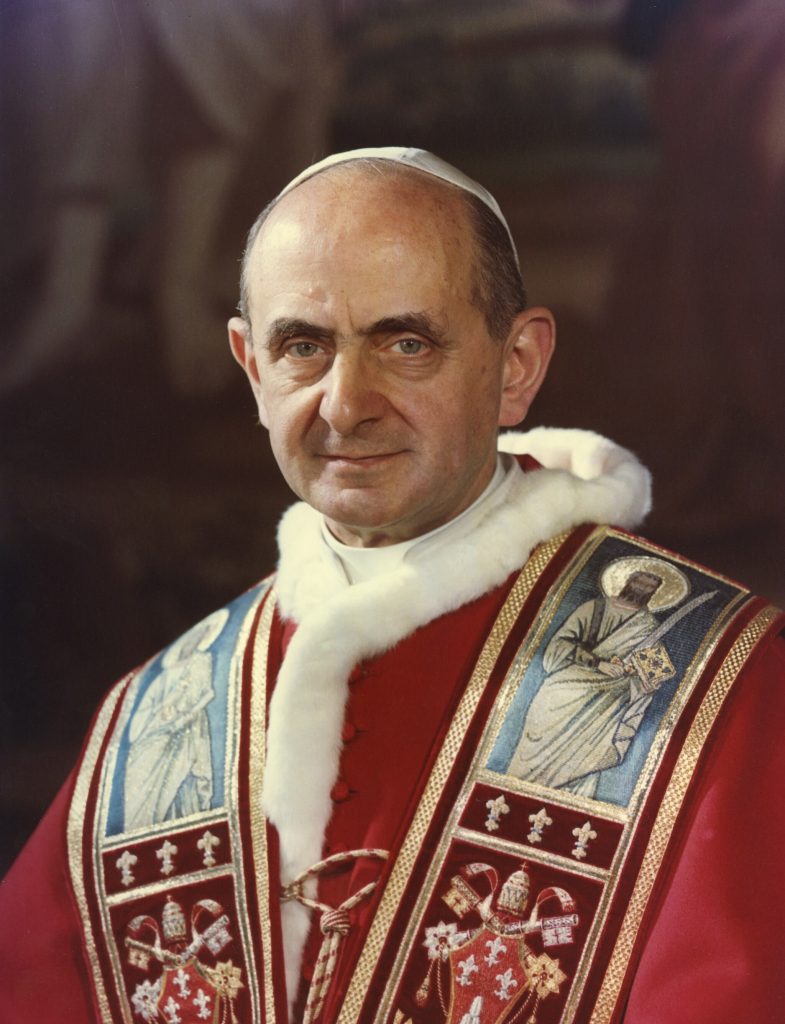
On Pope John’s death, his successor Pope Paul VI re-convened the Council, announcing as well that he intended to “erect and establish in Rome a permanent Council of Bishops for the universal Church”. He explained that he was doing this “in response to the desire of the Fathers of the Second Vatican Council” who wanted to keep alive its positive spirit, and to assist the Pope “in his governing of the universal Church”. Its proper name would be the ‘Synod of Bishops’. The pontiff confirmed his action in the Vatican II decree of 1965 Christus Dominus – On the Pastoral Office of Bishops in the Church.
Another great and holy man, Patriarch Athenagoras I, was caring for his Eastern flock. Like Pope Paul, he was aware of what was known as the “East-West question”, the Schism of 1054, which had left a shadow over all the Christian world. From the tenth century in Europe, the bishopric of Rome had become the subject of scandalous rivalry amongst kings and countries. In 1054, French born papal representative, Archbishop Humbert, invalidly excommunicated the Patriarch of the East, Michael Cerularius. Cerularius then held a synod with his own bishops to excommunicate the Pope’s representative. This feud divided the East from the West for nearly a thousand years… The filioque (“and the Son”) phrase in the Creed is a lesser part of the dispute. [1]
So, Patriarch Athenagoras I and Pope Paul VI mutually agreed to meet on 5-6 January 1964 in Jerusalem. This historic meeting was held on the Mount of Olives and was the first between a Roman Catholic Pope and an Eastern Patriarch, since 1054. They declared that the eleventh century excommunications were null and void… and the Catholic and Eastern Orthodox people of God breathed a sigh of relief.
The Second Vatican Council has affected the lives of Catholics in so many ways, nearly all positive. Most of the liturgies are now in the vernacular and understandable to all. The laity now have a greater role. Greater participation, ecumenism, and creativity are encouraged. There has been a shift in how the Church views its relationship with other religions. Religious life and living have become freer. More are studying theology, and social teaching. We have much to thank the Holy Spirit and the Fathers who gave us the Second Vatican Council.
Marie Therese Levey rsj
Timeline of Vatican II
- 1959: Pope John XXIII announces his intention to convene an ecumenical council.
- 1960: Preparatory commissions are established.
- 1961: The Apostolic Constitution Humanae Salutis officially summons the council for October 1962.
- 1962:
- 11 October: The council is solemnly opened by Pope John XXIII.
- 8 December: The first session is adjourned.
- 1963:
- 3 June: Pope John XXIII dies.
- 21 June: Pope Paul VI is elected and announces the council will continue.
- 29 September: The second session of the council begins.
- 1964: The third session is held.
- 1965:
- 14 September: The fourth and final session opens.
- 8 December: The council is solemnly closed by Pope Paul VI.
Dates of Approval. Voting out of c.2,800 bishops.
- Sacrosanctum concilium, Constitution on the Sacred Liturgy.
Approved 2,147 to 4 and promulgated by Pope Paul VI on 4 December 1963. - Inter Mirifica, Decree on the Means of Social Communication, 1963.
Decreed by the Council and promulgated on 4 December 1963 by Pope Paul VI. - Lumen Gentium, Dogmatic Constitution on the Church.
Approved 2,151 to 5 and promulgated by Pope Paul VI on 21 November 1964. - Orientalium Ecclesiarum, Decree on the Catholic Churches of the Eastern Rite.
Approved 2,110 to 39 and promulgated by Pope Paul VI on 21 November 1964. - Unitatis Redintegratio, Decree on Ecumenism.
Approved 2,137 to 11 and promulgated by Pope Paul VI on 21 November 1964. - Christus Dominus, Decree Concerning the Pastoral Office of Bishops in the Church.
Approved 2,319 to 2 and promulgated by Pope Paul VI on 28 October 1965. - Perfectae Caritatis, Decree on Renewal of Religious Life.
Approved 2,321 to 4 and promulgated by Pope Paul VI on 28 October 1965. - Optatam Totius, Decree on Priestly Training.
Approved 2,318 to 3 and promulgated by Pope Paul VI on 28 October 1965. - Gravissimum Educationis, Declaration on Christian Education.
Approved 2,290 to 35 and promulgated by Pope Paul VI on 28 October 1965. - Nostra Aetate, Declaration on the Relation of the Church to Non-Christian Religions. Approved 2,221 to 88 and promulgated by Pope Paul VI on 28 October 1965.
- Dei Verbum, Dogmatic Constitution on Divine Revelation.
Approved 2,344 to 6 and promulgated by Pope Paul VI on 18 November 1965. - Apostolicam Actuositatem, Decree on the Apostolate of the Laity.
Approved 2,340 to 2 and promulgated by Pope Paul VI on 18 November 1965. - Dignitatis Humanae, Declaration on Religious Freedom.
Approved 2,308 to 70 and promulgated by Pope Paul VI on 7 December 1965. - Ad Gentes, Decree on the Mission Activity of the Church.
Approved 2,394 to 5 and promulgated by Pope Paul VI on 7 December 1965. - Presbyterorum Ordinis, Decree on the Ministry and Life of Priests.
Approved 2,390 to 4 and promulgated by Pope Paul VI on 7 December 1965. - Gaudium et Spes, Pastoral Constitution on the Church in the Modern World.
Approved 2,307 to 75 and promulgated by Pope Paul VI on 7 December 1965.
[1] Cf. Catholic Catechism 246-248.
* Ioannes XXIII (Pope St John XXIII) by De Agostini Editore, Public domain, via Wikimedia Commons.
^ Paulus VI (Pope Paul VI) by Fotografia Felici, Catholic News Service, Public domain, via Wikimedia Commons.