
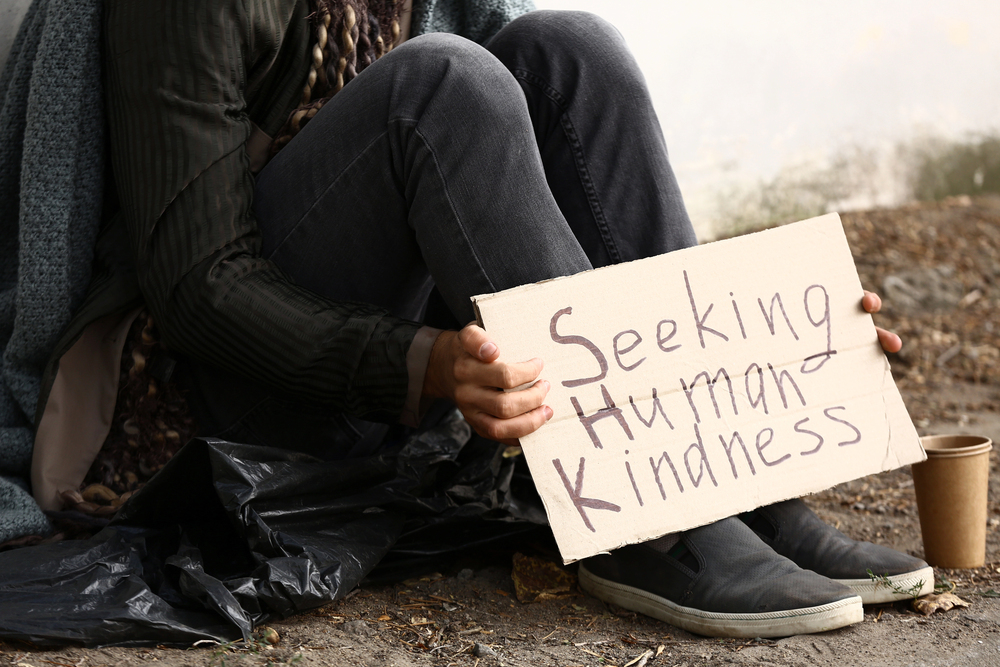
As we mark Anti-Poverty Week in Australia which occurs from Sunday 11 to Saturday 17 October and the International Day for the Eradication of Poverty also on 17 October, it is a stark reminder of the inequality that still exists between the rich and the poor, between the ‘haves’ and the ‘have nots’.
Presently, even though Australia is one of the wealthiest countries in the world, more than 3.2 million people live below the poverty line. [1] It is not unreasonable to surmise that this statistic would be similar in many other countries around the globe.
Pope Leo XIV, in his first Apostolic Exhortation, Dilexi Te, writes, “The condition of the poor is a cry that, throughout human history, constantly challenges our lives, societies, political and economic systems and, not least, the Church” (n. 9). He speaks of poverty as a multifaceted phenomenon.
There are various aspects of poverty such as economic or financial poverty, the poverty of human dignity and the poverty of the scarcity of right relationships. When we speak of poverty we think of those who live with a severe lack of basic necessities such as food, shelter, clothing and often face homelessness. Families or individuals whose income or resources are low, are especially at risk of not being able to participate fully in social, cultural or economic life. Those who experience a lack of money cannot access affordable housing; they do not have access to quality education or appropriate health services. They worry constantly about becoming homeless, skip meals, do not use heating or cooling in their dwellings and cannot afford to go to a doctor or buy medicines.
There is a level of commitment required by Government sources to remove the social and structural causes of poverty. Job Seeker and Youth Allowances and related payments have fallen behind in recent years. Child poverty has increased to where one in six (15.6%) of children in Australia live below the poverty line. [2] The accessibility to suitable and equitable housing opportunities are often unattainable for the poor. The discrimination experienced by our First Nations People across so many areas of their lives, keeps many of them living well below the poverty line. These are just some of the many examples, there are many more.
However, we need to recognise that each one of us also has the responsibility to do what we can ‘to relieve suffering and bring hope’. I am reminded of the old maxim, “Live simply that others may simply live”. The prophet Isaiah urges us to an ACTIVE compassion:
And if you spend yourselves in behalf of the hungry and satisfy the needs of the oppressed, then your light will rise in darkness.
If we learn to use only enough resources to care for people and to care for Earth, then there should be enough for all. The abundance of God would be experienced by all.
And let us not forget the lessons which the poor can teach us. Pope Leo XIV in June this year, released a message for the tenth World Day of the Poor (15 November) in which he writes that the poor are often more capable than others of recognising what is essential because “they live on the essentials”. For this reason, he says, they are especially able to recognise God as their refuge and place their hope in His justice. We can learn much from the daily heroism of so many poor people as they protect and defend their vulnerable families.
“Never see a need without doing something about it.” These words of Mary MacKillop also urge us to do our bit in whatever way we can to be an active, compassionate voice for those who have so little.
Katrina Van Ruth rsj
[1] ACOSS & UNSW Sydney, Poverty in Australia 2025: Overview: https://povertyandinequality.acoss.org.au/poverty_in_australia_2025_overview
[2] Ibid.