
Each year on 25 March, the feast of the Annunciation is celebrated. Indeed, throughout the ages, music and art worlds have proclaimed this feast. The oldest fresco is traced back to as early as the fourth century, while the Flemish painter Jan van Eyck’s The Annunciation originated in the 15th century. This latter work has a fresh look with the messenger depicted as a human. The masterpieces throughout the centuries mainly show the appearance of an angel which was a literal translation of the scripture passage.
I have occasionally heard incredulous statements about this happening and particularly of the angels. In ABBA’s song, I Had a Dream, the songsters tease:
I believe in Angels, something good in everything I see
I believe in Angels, when I know the time is right for me.
These optimistic and hopeful insights speak of resilience and a willingness to pursue purpose and decision.
Mary, a young woman was swept up in turmoil and fear. God’s message came to her out of nowhere. This was an astounding request. Mary did ask how it would happen and with the explanation she said, “Yes” – in spite of her perplexion of what was to happen. This message called for the reshaping and transforming of her life.
Mary’s goodness, contemplative stance and devotion enabled her, while full of fear and trepidation at the coming events in the months ahead, to cope with the questioning of her parents and of Joseph and the gossip of the neighbours.
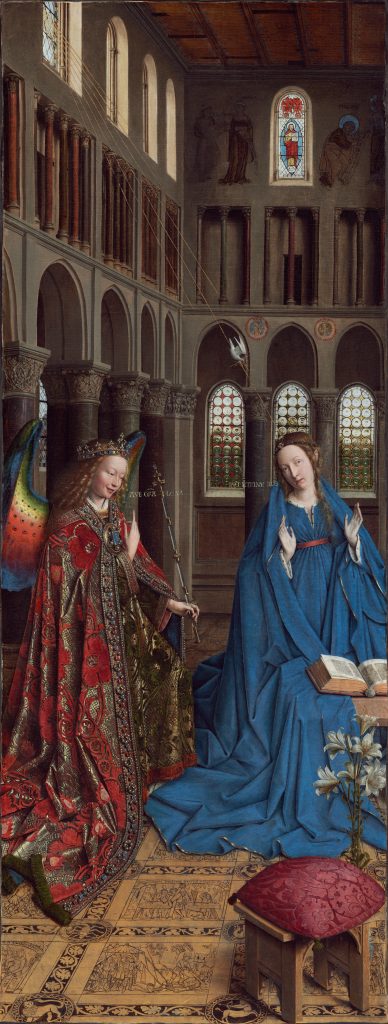

But we are told of meek obedience.
No one mentions courage.
The engendering Spirit
did not enter her without consent.
God waited.
She was free
to accept or to refuse, choice
integral to humanness.
Denise Levetov – Annunciation
The feast of the Annunciation is actually the announcement of God becoming human like us. It is the beginning of the Incarnation, the greatest occurrence of God with us. While God has always loved us, this great act of love was given so that we could understand the goodness and wisdom of God.
Each day we receive messages from God. We each have little and big annunciations that can only be recognised through contemplative hope and strong belief. These calls are invitations to come to wholeness and fruitfulness.
Denise Levetov’s gracious insights give depth to the occasion:
‘How can this be?’
and gravely, courteously,
took to heart the angel’s reply,
perceiving instantly
the astounding ministry she was offered:
to bear in her womb
Infinite weight and lightness; to carry
in hidden, finite inwardness,
nine months of Eternity; to contain
in slender vase of being,
the sum of power –
in narrow flesh,
the sum of light.
Then bring to birth,
push out into air, a Man-child
needing, like any other,
milk and love –
but who was God.
Denise Levetov – Christmas
Michele Shipperley rsj