
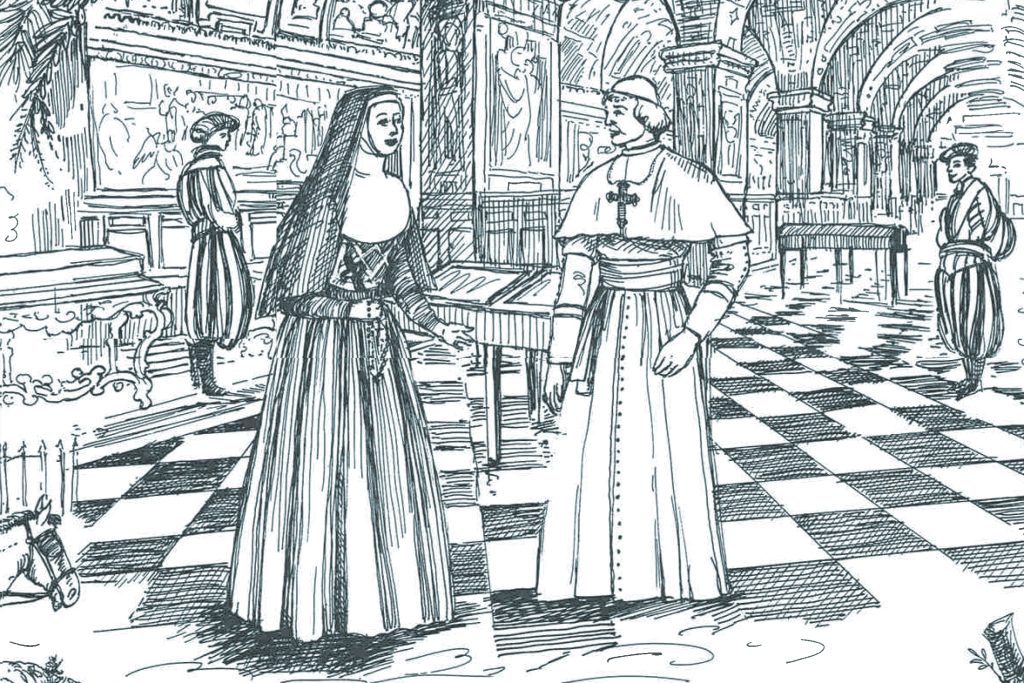
“I am going to Rome… and I go full of hope!” Thus, wrote Mary MacKillop to her Sisters on 25 March 1873. It reads like a simple statement but hides a wealth of grief, anxiety, hope and a profound trust in the Providence of God, her good God to whose “adorable will” she encourages her Sisters to accept in “humble submission… and in all circumstances whether pleasing or not to your natural inclinations”. [1]
In that era, all women’s religious congregations were under the authority of the local Bishop and were ‘enclosed’ – not able to go freely out and about. Some congregations had lay sisters who took care of the needs of the cloistered sisters. Mary wanted her Sisters to be able to go amongst the poor and needy of the day. She was considered to be disobedient and was excommunicated by the Bishop Sheil of Adelaide on 21 September 1871; the excommunication was then lifted by Bishop Sheil on 23 February 1872.
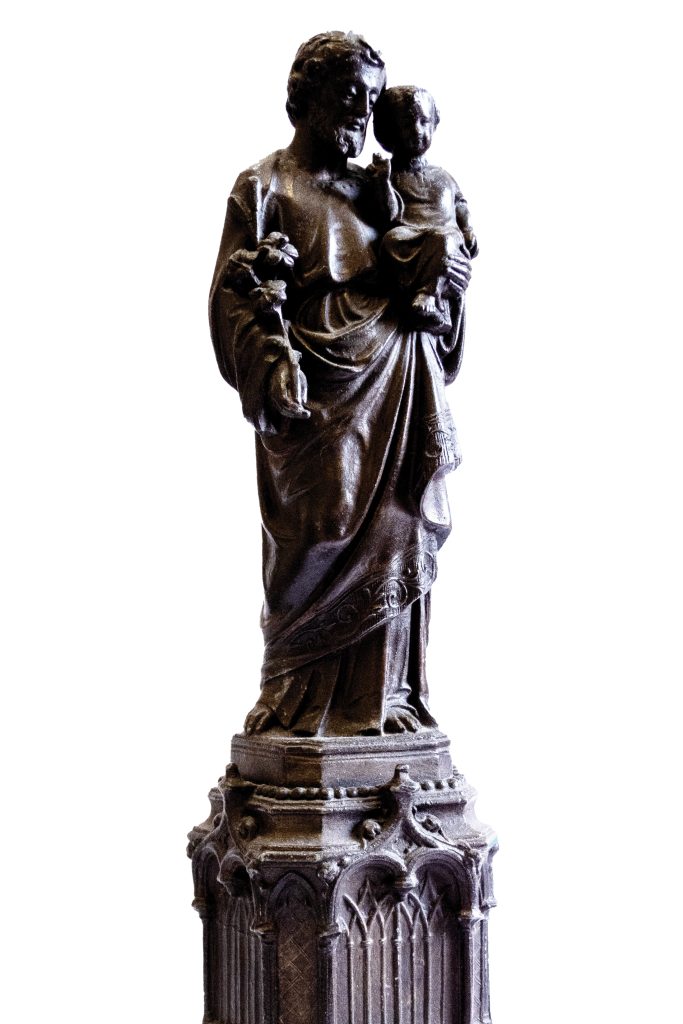
Mary decided to go to Rome to seek papal recognition for the Institute (Congregation) because she wanted her Sisters to be available to work amongst the poor in Australia.
She had letters of introduction to Monsignor Kirby, an Irish priest who worked in the Vatican. It was he who arranged meetings for Mary with Pope Pius IX not once but three times, an extraordinary privilege, as she recounts, granted by a man who was suffering severely in the political situation of the day.
Her first audience with Pope Pius IX was on 1 June 1873; “Pentecost Sunday, 1 June, was according to Mary’s diary ‘a day never to be forgotten, a day worth years of suffering’. She had her first audience with the Pope, with [Cardinal Alessandro] Barnabò and [Monsignor] Kirby there to introduce her. Because there were severe measures against religious in Italy at the time, it could be dangerous to move about in her religious habit. But for this audience she wore her habit, and was able to report home: ‘Our loved habit has at last been blessed by the Pope’.” [2]
Mary had written to her mother Flora about the meeting and wrote:
On Sunday I had the happiness of seeing the Holy Father and of obtaining a warm blessing from him for myself and my dear Sisters. What he said and how he said it when he knew I was the excommunicated one, are things too sacred to be spoken of – but he let me see that the Pope has a Father’s heart, and when he laid his loved hands on my head, I felt more than I will attempt to say.
Mary left Rome on 1 August 1873, not with full approbation of the Rule but a profound feeling of gratitude.
Sr Maria Casey
[1] Mary MacKillop’s letter from Adelaide to her Sisters, 25 March 1873.
[2] Gardiner, Paul, 1993 (reprinted 2011), An Extraordinary Australian: Mary MacKillop, p. 129