
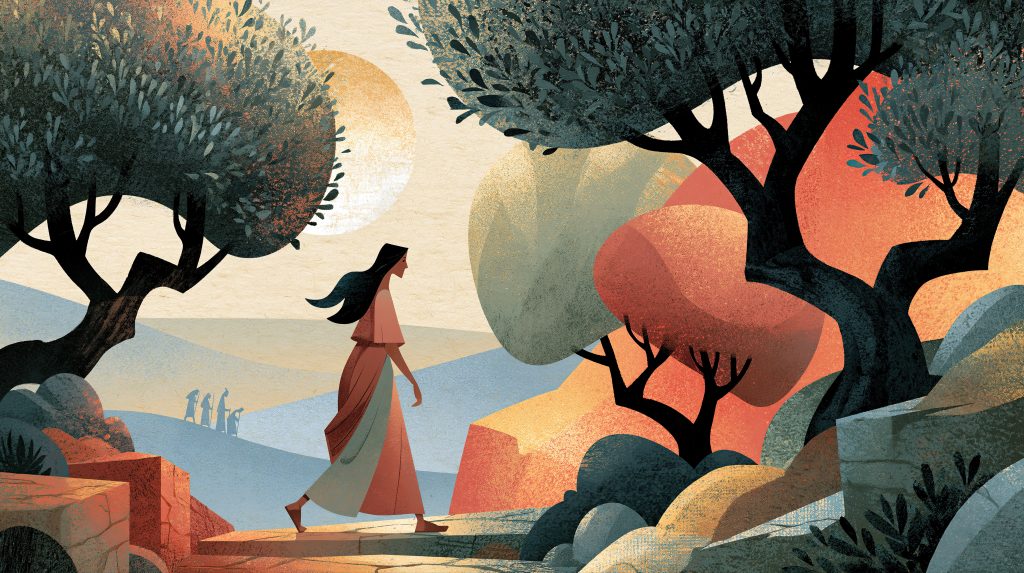
What do we know about Mary Magdalene? From the Gospels we know that Jesus healed Mary Magdalene of seven demons (Luke 8:2); that she was among a group of women who followed Jesus and “attended to his needs” (Mark 15:40); that she stood at the Cross watching Jesus die (Matthew 27 56, Mark 15:40, Luke 23:49, John 19:28); that she waited at the tomb (Matthew 27:61); that she returned to the tomb, when the Sabbath was concluded, to anoint Jesus’ body (Matthew 28:1, Mark 16:1, Luke 24:9, John 20:1); and that she is the first to encounter the risen Jesus (Matthew 28:9, Mark 16:9, John 20:14 ff), and that Jesus commissions her to proclaim his resurrection, “Go to my brothers and say to them I am ascending to my Father, and your Father, to my God, and your God, So Mary of Magdala went and said to the disciples, “I have seen the Lord; and this is what he said to me.” (John 20: 17-18).
Western Christianity has long attributed the title, “Apostle to the Apostles” to Mary of Magdala, while in Eastern Christianity she is called “Equal to the Apostles”. In 2016, Pope Francis elevated Mary Magdalene’s liturgical status to that of Saint. By doing this he highlights Mary’s unique role in the Gospels and the Church’s mission of spreading the Good News.
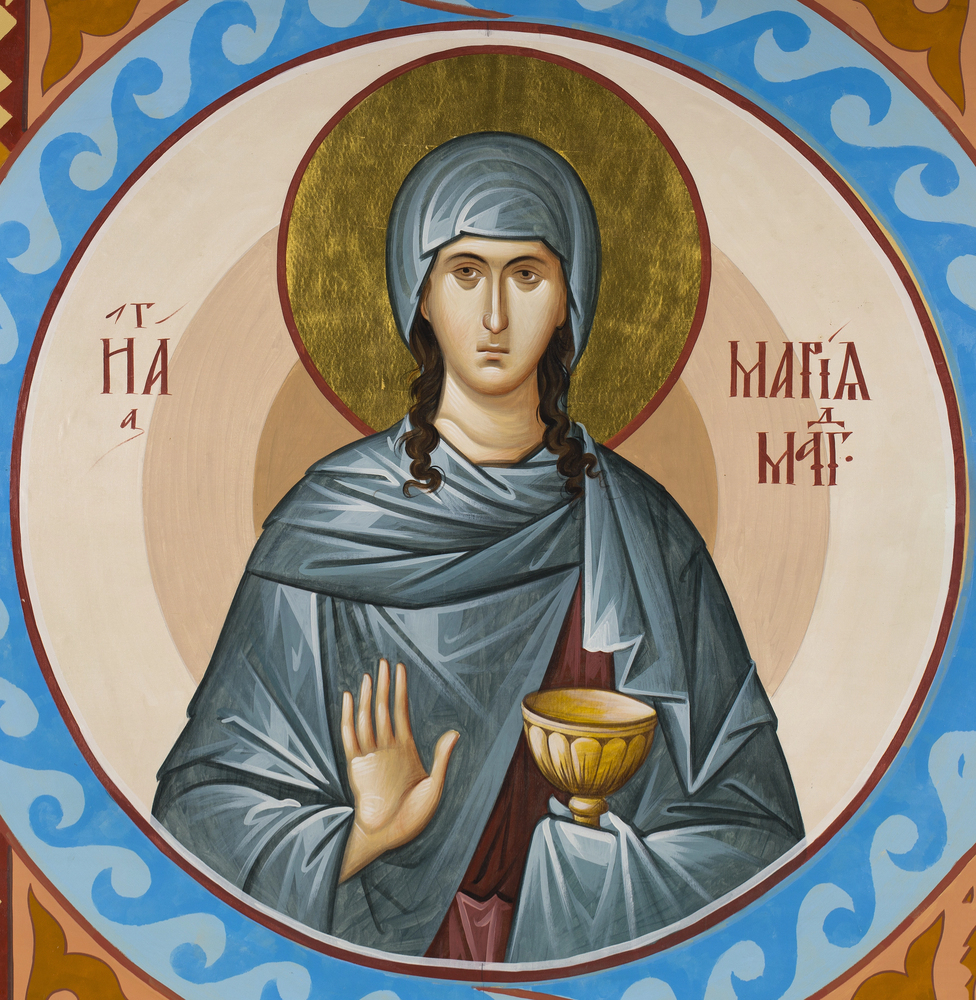
Mary Magdalene is so much more than the above facts.
So, what does this woman, who lived in our world over 2000 years ago, have to say to us and call us to, we who live in this 21st century?
I am reminded of the song Love Changes Everything by Andrew Lloyd Webber. In this song there are phrases such as: “Love changes everything; how we live and how we die; can make a night seem like a lifetime; cause me to tremble at your name; pain is deeper than before; will turn your world around: will never, never let you be the same.” There are shades of light and dark in the way Webber expresses the “work” of Love. In some ways Mary Magdalene’s story is a “love story”.
Mary was most likely an outcast in society because of the seven demons within her – most probably manifested by illnesses. It was her encounter with the healing love and compassion of Jesus that changed her life. Restored to health and the community, Mary’s heart was drawn to Jesus and she, with others, became a faithful follower. Travelling with Jesus, she would have been formed in his ways and her own compassion and love would have deepened.
After the story of Mary’s healing, we do not hear about her again until the ending of Jesus’ earthly life. Mary is at the Cross. Watching but helpless, she stands firm in the face of Jesus’ pain and her grief. She follows to the place of Jesus’ burial and remains there for a while. Her’s is a love that remains faithful.
After the Sabbath is concluded Mary returns to anoint Jesus’ body, only to discover the tomb empty. Once again Mary experiences pain, grief and loss, “I do not know where they have put him.”
Mary’s story ends as it began – an encounter with love itself. In the garden, she recognises the risen Jesus as he speaks her name, “Mary”. There would have been the same familiar tone that Jesus used when speaking with Mary as they travelled together. Her tears become joy as she replied “Rabboni, Master.” Jesus, while travelling towards Jerusalem would have learned much about Mary, her steadfastness, fidelity, love, compassion and so entrusted her with the message of his resurrection, “Do not hold on to me, for I have not yet ascended to the Father. But go to my brothers and say to them, I am ascending to my Father, and your father, to my God, and your God.” (John 20:17). Mary of Magdala, a woman, the first witness to the resurrection, a disciple who becomes a missionary.
Mary speaks to each of us about the power of encountering Love and the transformation that can follow. I invite you to read John’s Gospel (Chapters 19 & 20) of Jesus’ death and resurrection, putting yourself into the place of Mary of Magdala. Then ponder your Mary of Magdala moments. Moments of encountering love that can transform; that call you to steadfastness and fidelity; to hope even in grief, and joyful discipleship.
Dr Anne Bond rsj
[1] Illustration by hramikona@gmail.com. Obtained from DepositPhotos.