
Annually in Australia, we commemorate Refugee Week. In 2026, it will be held from Sunday 14 to Saturday 20 June, with the theme ‘A Million Stories’. Sr Joan Healy shares a reflection on the Josephite contribution to supporting refugees, along with her own experiences and stories of accompanying them.
Mary MacKillop and Father Julian Woods shaped a firm foundation for challenges they never would have foreseen. Our Josephite call has brought us close to the mothers, fathers, children who struggle with the deep pain of losing everything that is most precious.
At the end of the Second World War, boatloads of refugees flocked to Australia. We watch them disembark from ship to port. Their belongings are sparse, they have many children and, for the majority, no grasp of English. The numbers swell and those from Catholic countries seek Catholic schools. Josephite schools are established in the places where poor people might hope to live and find work. The Sisters meet the challenge of soaring classroom numbers. They seek creative ways of helping the parents to settle. Decades on, when these newcomers have found their way, when those small children of the big classrooms are young adults, some young women from among the refugee families feel called to religious life. Many choose to join the Josephite Sisters. Their story is forever into our story.
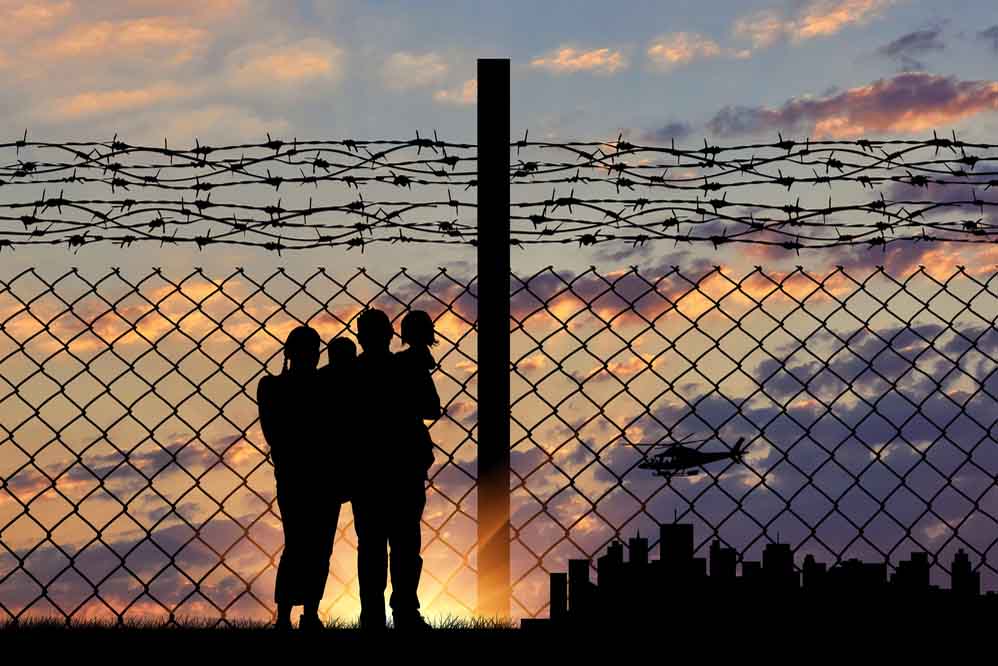
The Jesuits launch a refuge service: Jesuit Refugee Service (JRS). Josephites contribute in diverse ways. After an invitation and a discernment, I am in Site Two, a refugee camp on the border between Thailand and Cambodia. An estimated 160,000 refugees are held in a small space. They are surrounded by barbed wire and guarded by armed Thai soldiers. These refugees cannot go forward to Thailand or go back to Cambodia – they suffer. A small group from among them, led by a refugee whom I will call Nee, has voluntarily set up a centre to ease the grief, fear and mental illness in this camp. They have asked for more training. JRS has recruited a Belgian psych nurse and me to help. Every day we drive to the Camp in a battered Ute. We listen and learn.
In the Thai village where we live, I come across a film depicting life inside Cambodia. I show it to Nee. He says it gives hope; his team could use it on Human Rights Day. He knows refugees in the camp who have skills to offer; they meet and tell me what to do. ‘Bring the Ute in before daybreak on Human Rights Day. We will mount screens and loudspeakers and show this film every hour on the hour from dawn to dusk. Invitations for the time and place of each showing will be posted across the camp.’
Families gather early. They watch. They weep. They hold their children up to the screen to see their country. Some follow the Ute, watching the film over and over. I walk beside and hear their stories. By the tenth showing, there is a large crowd shouting, laughing, crying. Suddenly an armed soldier escorts me to the office of a leader known to be brutal. This man, whom I have met before, is not threatening me but is threatening Nee. He mentions a possible hand grenade.
I push back through the crowd to Nee. He says, ‘This is not a political movie. If people are not allowed to think of their own story, and to see images of their own homeland, then truly we are frogs in the bottom of a deep well’. The crowd is listening. These people know the risk. Women and men walk shoulder to shoulder to the final showing. I forever recall compassion and courage among people in the darkest of situations.
Much more recently, in Melbourne’s western suburbs, I have been close to the struggles of the South Sudanese mothers who have carried many children, who weep over separation from their own mothers. With help, some have passed the difficult exam for citizenship. This is their day to celebrate. I feel their excitement. In a packed town hall, Bill Shorten is moving from family to family. In his speech he has quoted, ‘Kindness in another’s trouble, courage in your own’. There are Australian flags to wave. They are not refugees; they are Australian citizens now.
Joan Healy rsj