
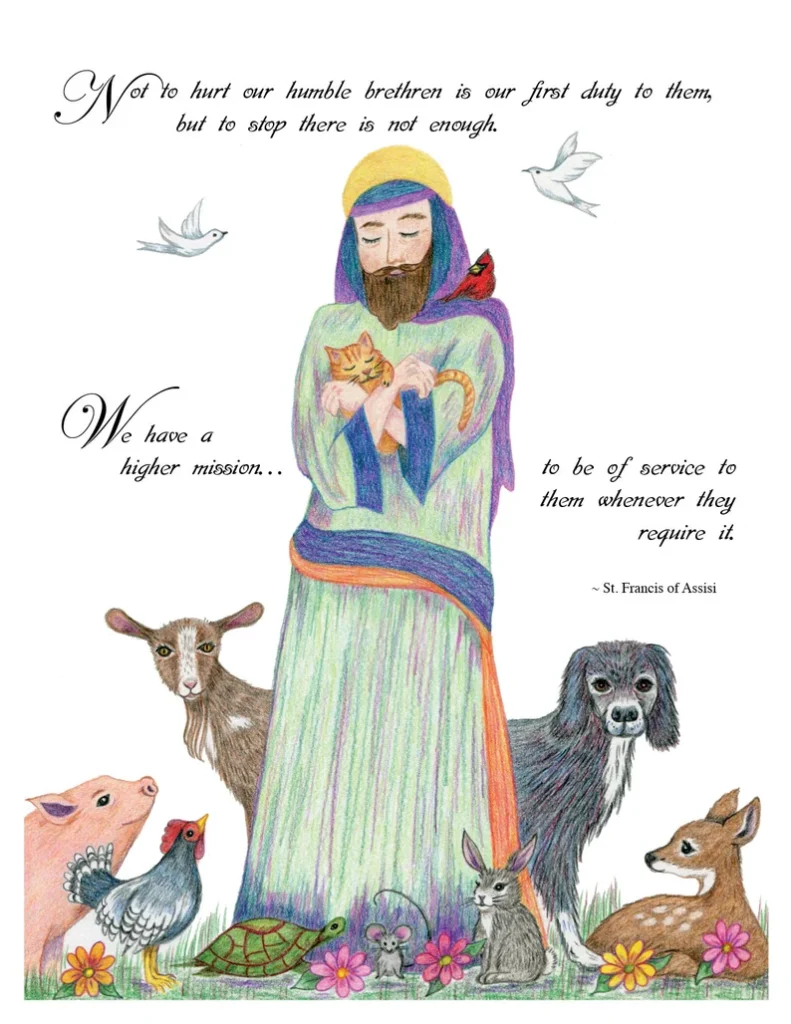
The Franciscan vision of peace is not limited to the relations between human beings but also embraces the whole of creation. Francis, who calls the sun ‘brother’ and the moon ‘sister’, who recognizes in every creature a reflection of divine beauty, reminds us that peace must be extended to the entire family of Creation.
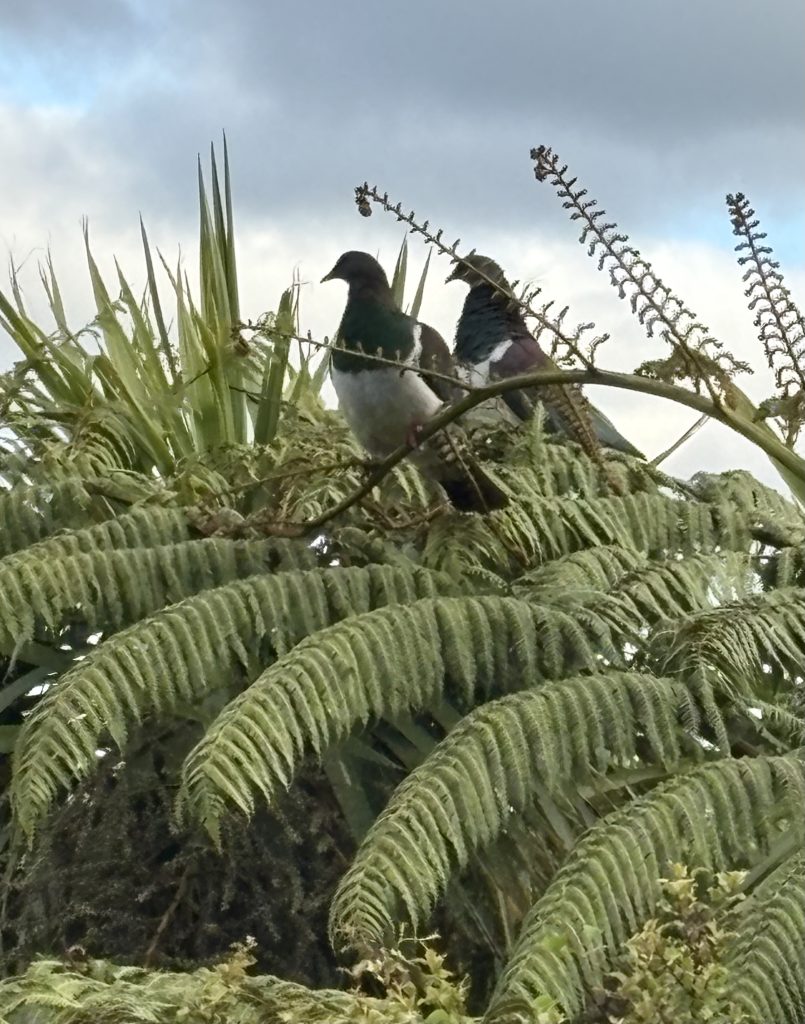
E koekoe te tūī, e ketekete te kākā, e kūkū te kererū*
It takes all kinds of voices to create a harmony; everyone has a unique contribution to make.
Our prophetic stance of Inclusion and Pope Francis’ invitation to ‘nurture that sublime fraternity with all creation which St Francis of Assisi so radiantly embodied’ (Laudato Si’, para. 221) encourages us to look again at the quality of our relationship with our animal kin.
Mary MacKillop and Julian Tenison Woods serve as fine examples of where this sublime fraternity can personally take us: Mary loved the company of animals from her early life to the bond she shared with her beloved dog ‘Bobs’ later in life. Julian noted as a truly ‘entheos’ one, found God in all the creatures of our world.
St Francis of Assisi, patron saint of animals, the environment and ecology, instinctively knew that ‘not to hurt our humble brethren’ was only part our duty; we are also to be moved by an attitude of service to them.
David Attenborough, in our time, is an exemplar of this service, expressing in an interview with the Metro newspaper (29.1.2013): “I am not an animal lover if that means you think things are nice if you can pat them, instead I am intoxicated by animals.”
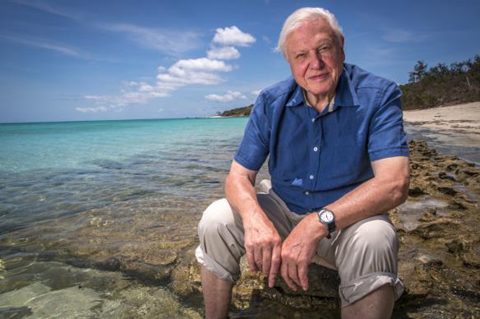
An intoxication that continued for decades and his recent joy in finding the return of wildlife to the wetlands and backyards of London, where he lives.
This idea of duty, service and companionship with creatures also lightens up the lives of two of our contemporary theologians: Elizabeth Johnson csj with her beloved Orion and Joan Chittister osb in the company of Lady Hildegard (view photos here).
An awe-inspiring interaction with our animal kin is revealed in the documentary, The Velvet Queen, where a photographer and writer set off to film the elusive snow leopard in the Tibetan Mountains.
Accompanied by a penetrating soundtrack by Nick Cave and Warren Ellis, Cave’s lyrics, “we are not alone, the world has ears and the rocks have eyes… and this is good for our heart” responds to the seemingly lifeless landscape that bursts with all kinds of life under closer, quieter observation.
Love is not exclusive, but inclusive. Loving animals does not mean loving people any less, because love multiplies. Everything is interconnected, and caring for the works of creation is a way of caring for humanity.
Resources for perusal:
- Saint Francis Institute for Animals | Catholic Animal Advocacy
- 30-Day Harmony with All Creatures Journey | Act for Animals Today — Saint Francis Institute for Animals
- 10 Ways Parishes Can Honor Saint Francis’s Love for All Creatures During His Jubilee Year — Saint Francis Institute for Animals
- World Animal Protection International | End Animal Cruelty
Marie Roche rsj and Adrienne Gallie rsj
*This whakatauki, (Māori proverb) – the tūī chatters, the kākā cackles, and the kererū coos – highlights the value of diversity, celebrating that every voice, no matter how different has a place and purpose.